Flagship
 Havernor
Your whole business, run from one conversation: sales, numbers, operations and meetings in one suite, and nothing important happens until one of your people says yes.
For business owners and their teams
Live

DevSpeak Labs · Custom software with AI agents, for every kind of business
We design, build and run the software your business needs: a CRM, an online store, a dashboard for your machines, an internal app. Inside each one, an agent harness puts agentic AI to work for your team, under your control.
Free, no commitment. After the call you receive a custom proposal.
01 · What we do, at a glance
Six kinds of projects, for businesses of every size. Each one has AI that does part of the work, and a person who approves what matters.
Decisions that matter always wait for one of your people.
02 · Our products
Before we built software for anyone else, we built and launched these. Each one is live, on its own domain or in its official store, and runs on the same agent harness we bring to every custom project.
Flagship
HavernorYour whole business, run from one conversation: sales, numbers, operations and meetings in one suite, and nothing important happens until one of your people says yes.
For business owners and their teams
Flagship
 DevSpeak
Turns informal requirements into clear technical specs, written for the people who build the software.
For product teams and software developers

 gRit
Turns any code repository into a visual canvas: branches you create, merge and sync by dragging them.
For developers on GitHub and GitLab

 TalentAssisto
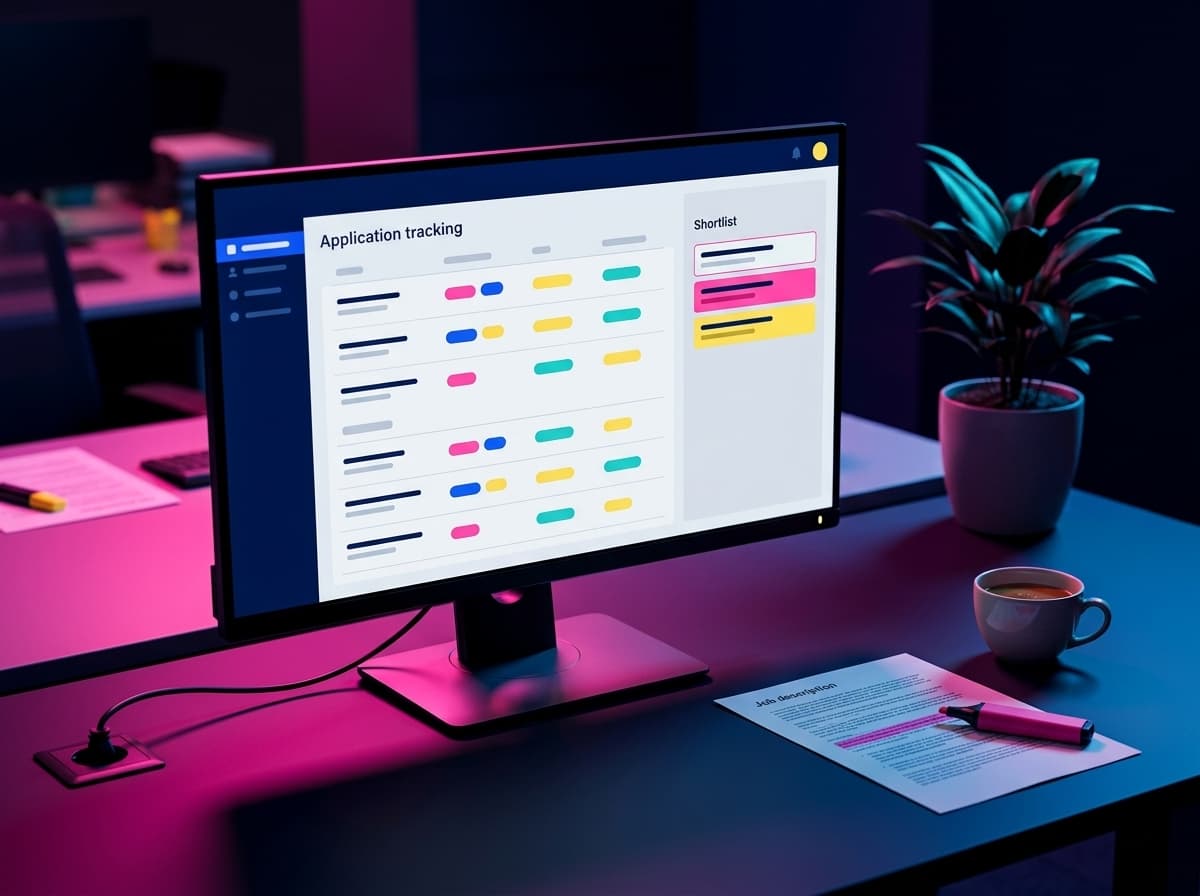
AI assistants trained on your own HR documents: they review resumes, answer policy questions and draft employee documents.
For HR teams and recruiters

 SkipSponsor AI
A free Chrome extension that finds the sponsor read inside a YouTube video and skips it, with one click to undo.
For people who watch YouTube in Chrome

 DevSpeak Utilities
Four focused tools for the text people hand to AI agents: task specs, safe prompts, clear technical English and prompt testing.
For developers who work with AI agents

Four apps, one suite
 SpecStudioSpecs
Turns a plain request into a task an AI browser agent can follow and a person can audit.
 Prompt GuardianPrompt safety
Tests system prompts against attacks, and a person approves every change.
 Dev Text ForgeTechnical writing
Rewrites technical text into clear English and keeps every name and number intact.
 PromptForgePrompt tools
A toolbox to write, check, harden and test prompts.
03 · What we build
Six kinds of projects we take on. In each one, an AI does part of the work and a person approves what matters.

Internal portals, request and approval flows and document workspaces, built around the way your team already works.
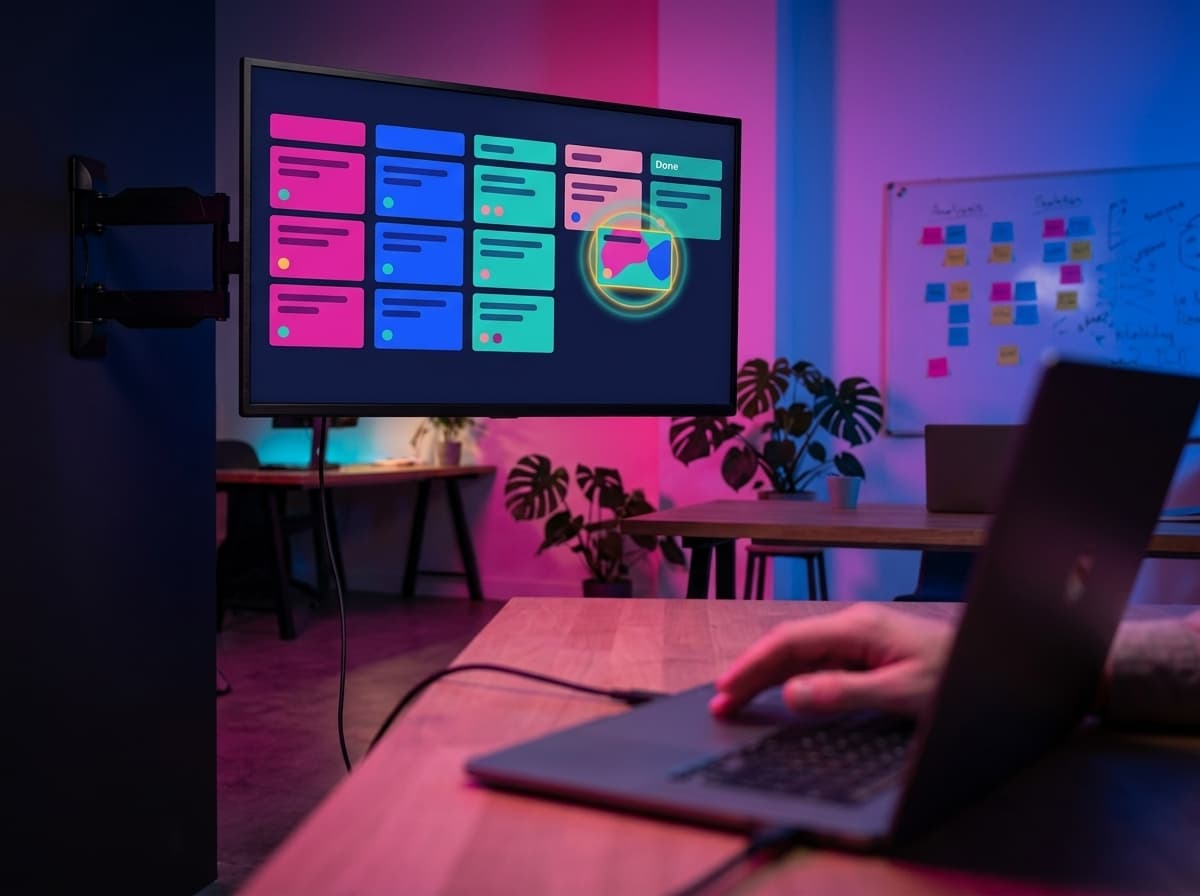
For exampleA company portal where requests, approvals and documents live in one place. The AI sorts each request and drafts the first answer.
Your own CRM, shaped to your sales process instead of the other way round.
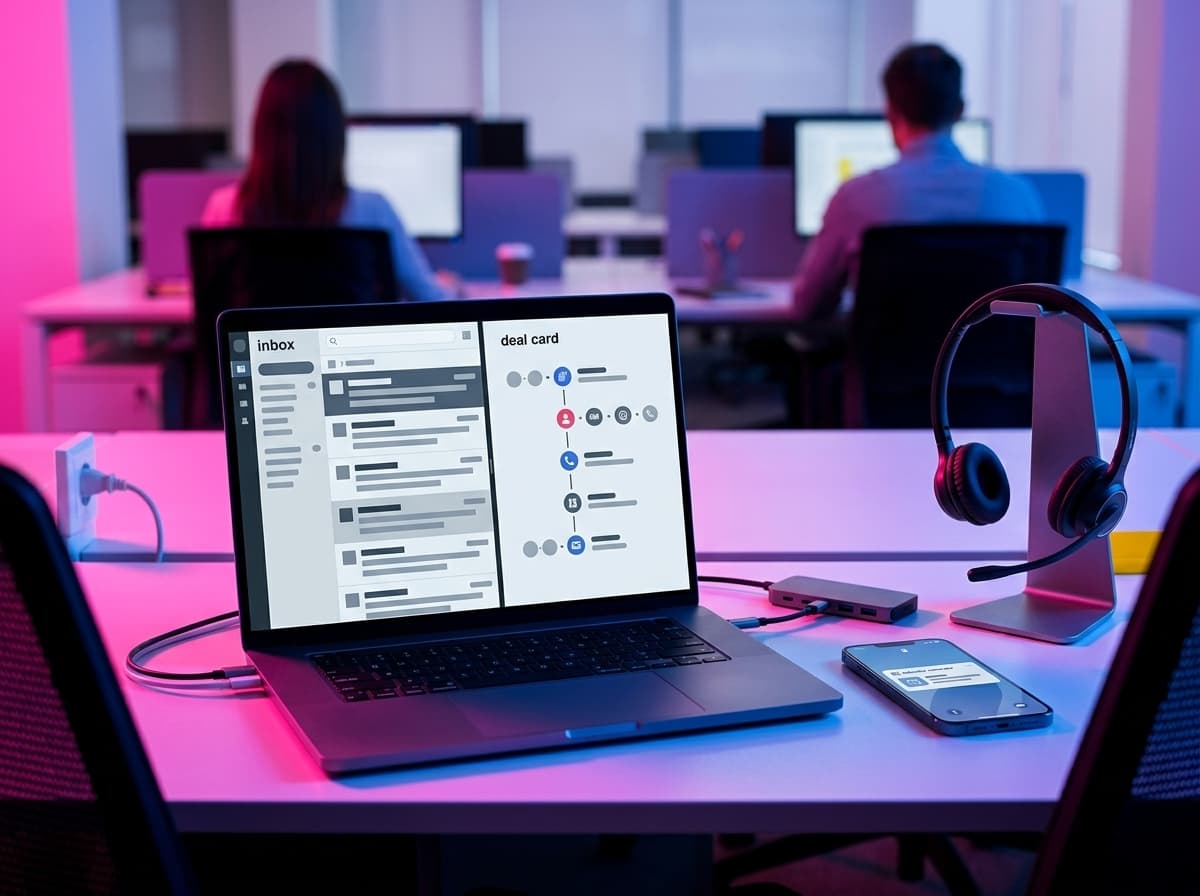
For exampleA startup's own CRM. The AI logs every email and call, reminds the team who to follow up with, and drafts the message.

Dashboards for machines, sensors and operations, with alerts that reach the right person.
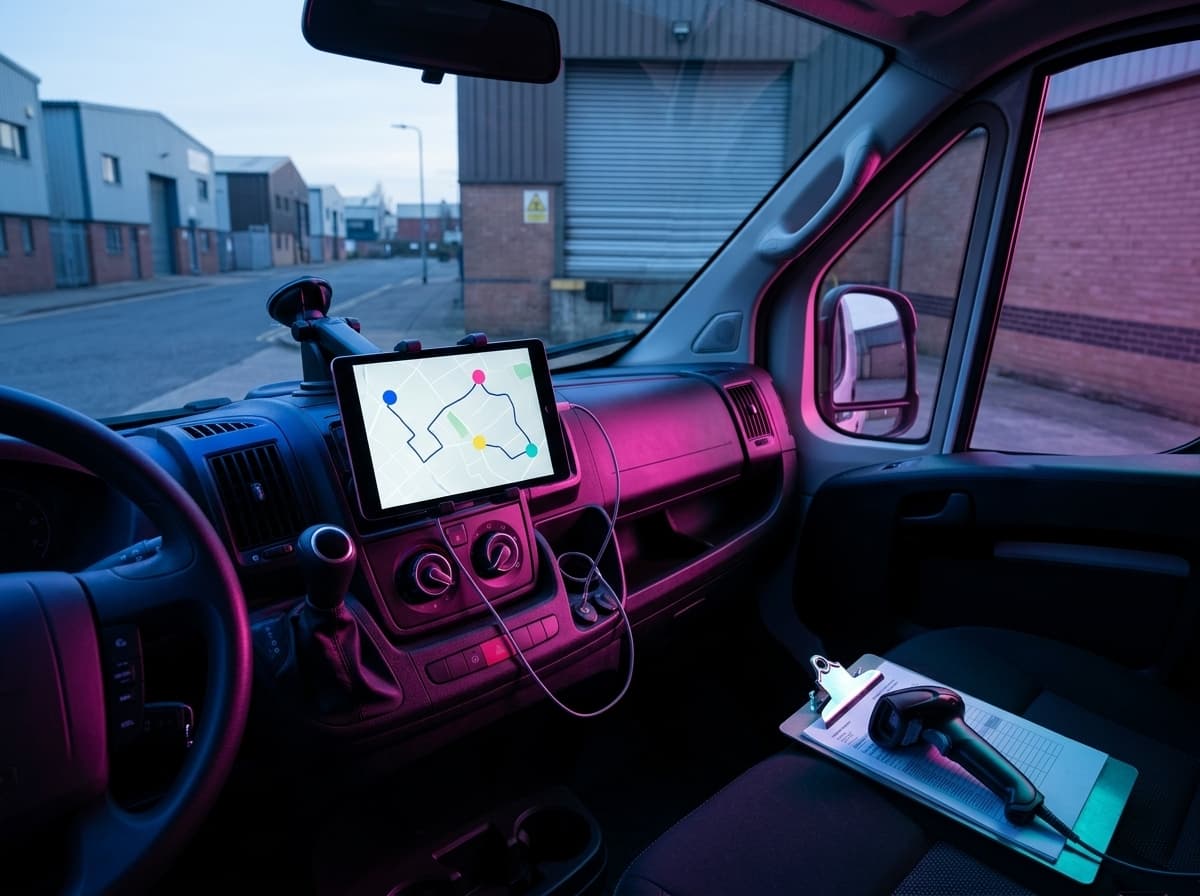
For exampleA manufacturer's telemetry dashboard. The AI watches sensor data, flags a machine that is drifting, and opens a maintenance ticket before it breaks down.
Online stores that answer customers at any hour, in their language.
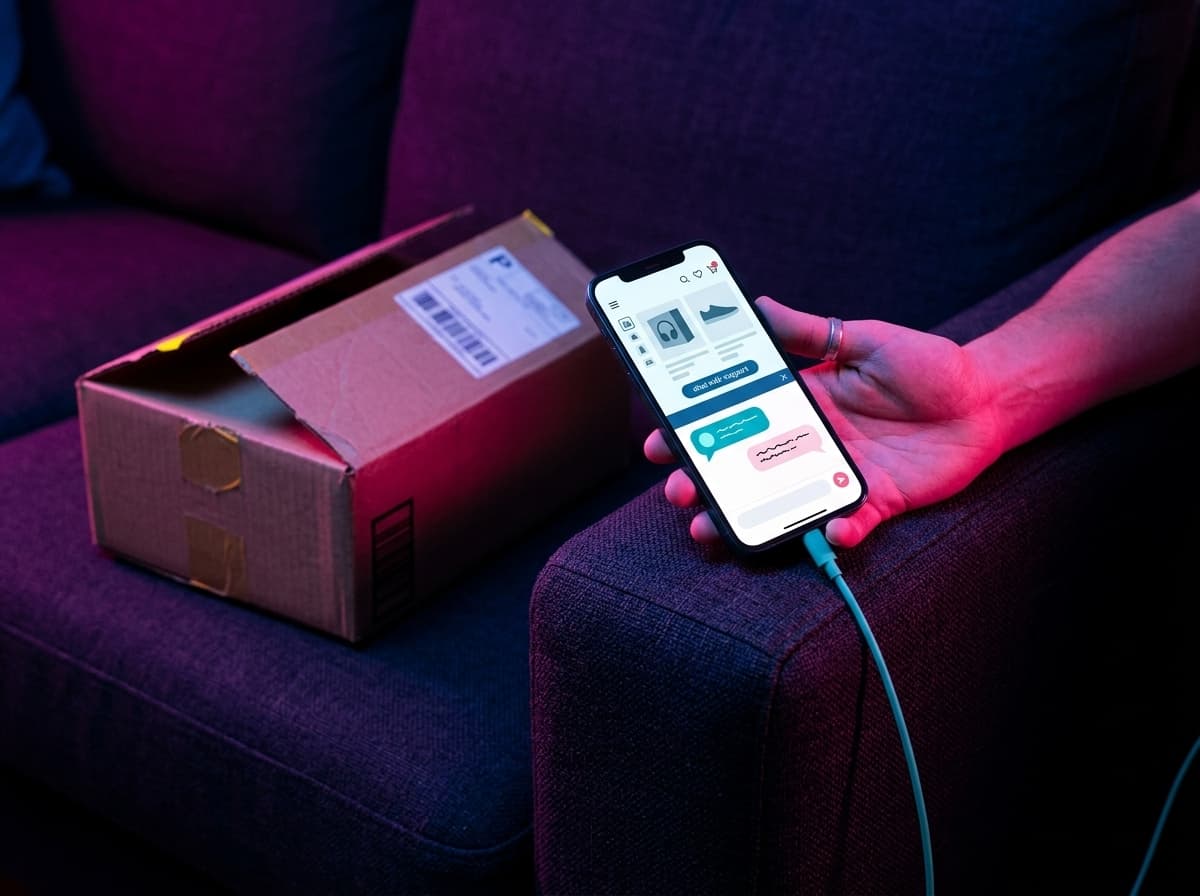
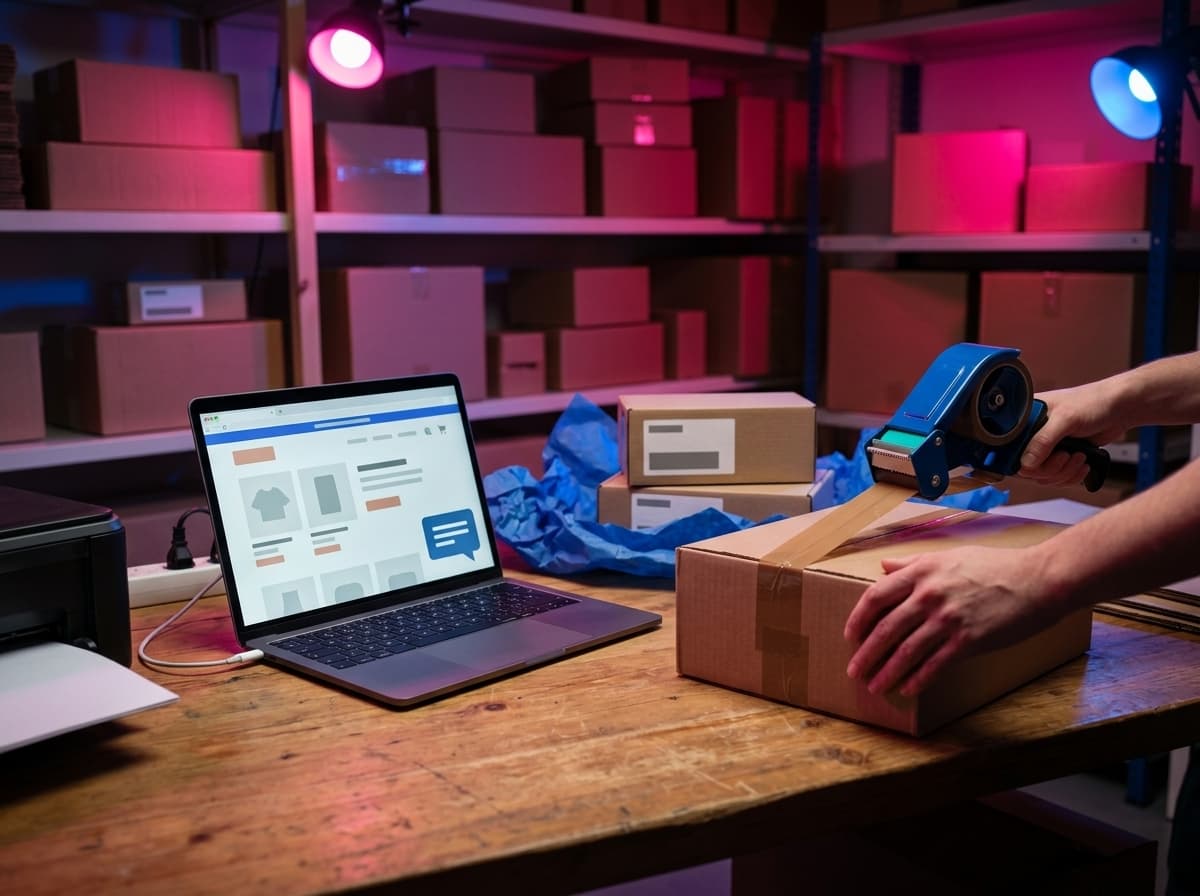
For exampleAn online store whose assistant answers product and order questions, day and night, and hands the conversation to staff when a person is needed.
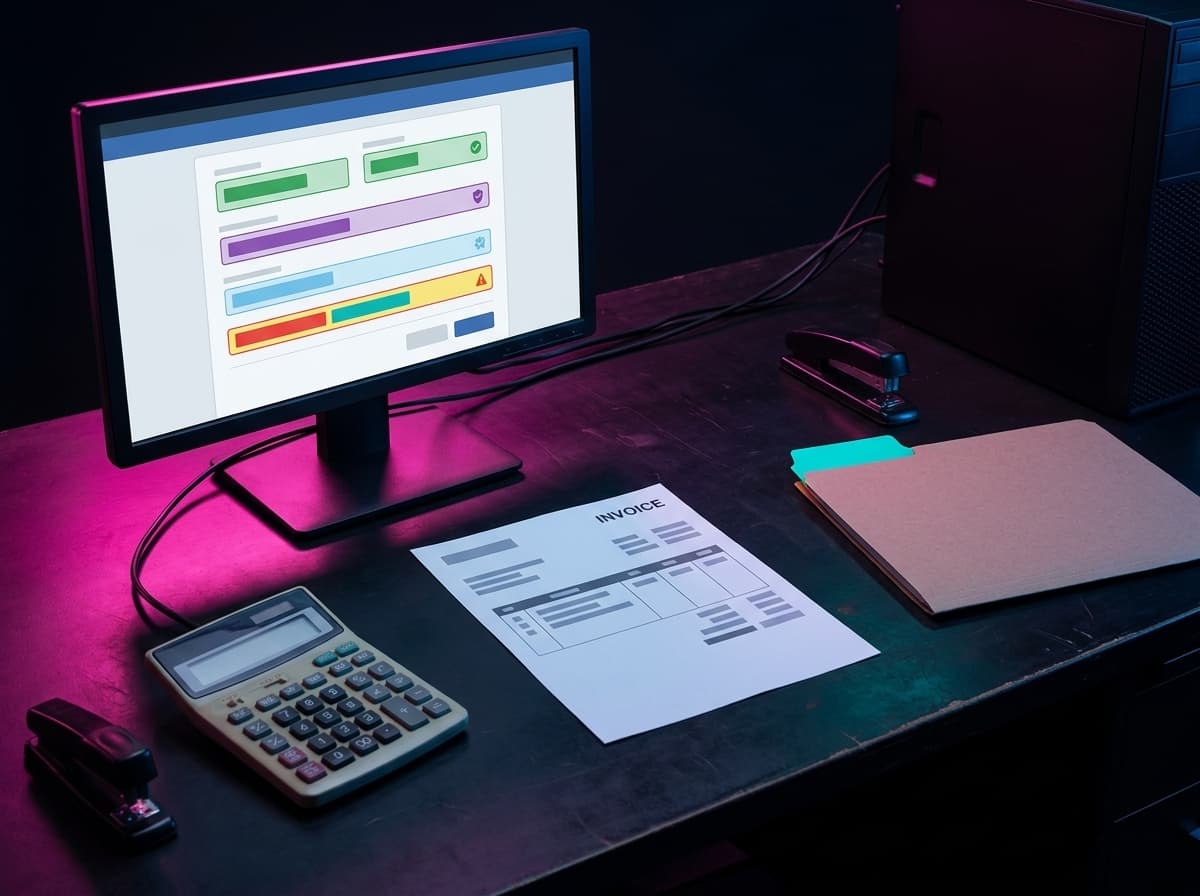
The copy-and-paste work between email, spreadsheets and your ERP, done for you.
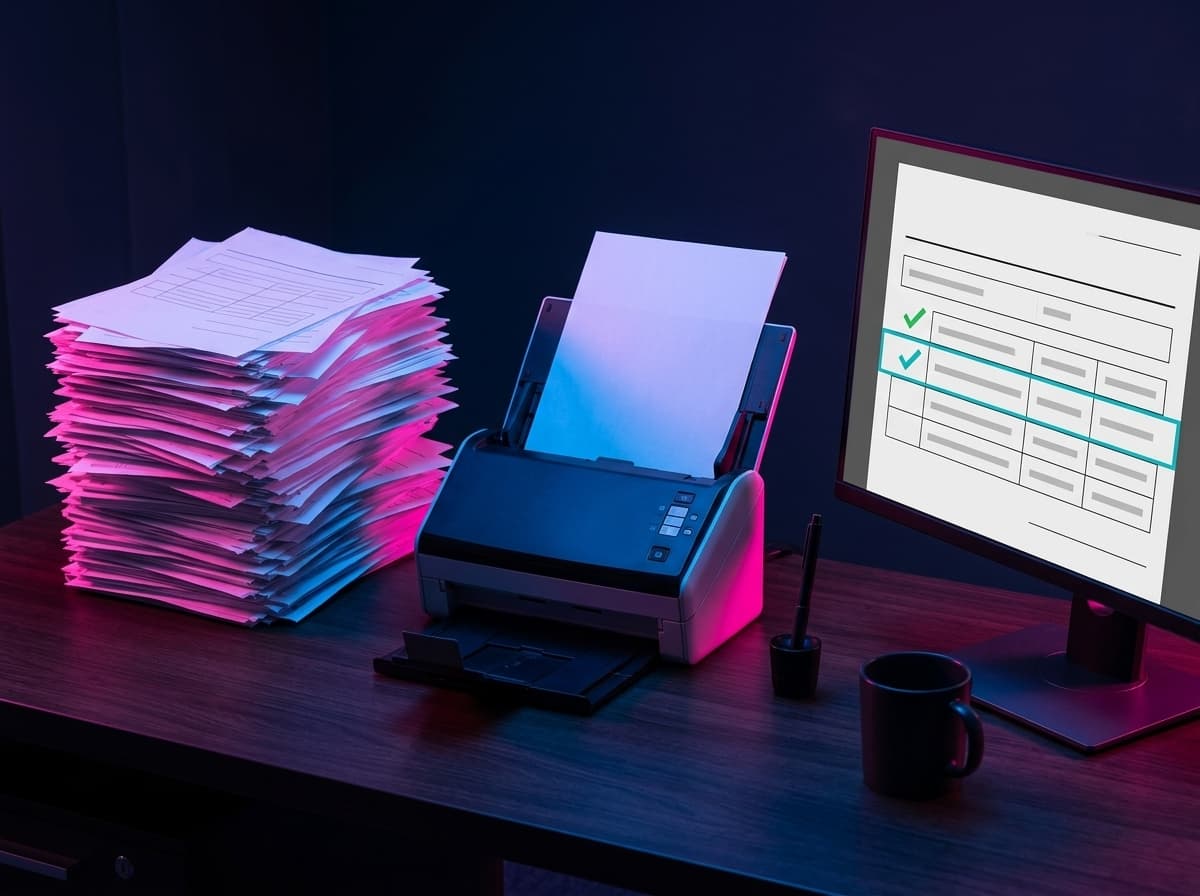
For exampleInvoices, purchase orders and reports that today get copied by hand. The AI moves them, and a person approves the exceptions.

Not sure where AI fits in your business? We find out together.
For exampleWe start with a free 30-minute call, map one process together, and send a custom proposal with scope and timeline.
Images: AI-generated illustrations.
04 · The engine under the hood
The AI model is the fuel. The harness is the engine that turns it into work you can trust. It gives the AI only the information about your business that it needs. It connects the AI to the systems it has to use, such as your inventory, your CRM or your machines. It follows your procedures step by step and tests its work on real cases before anything goes live. Before it spends money, signs anything or changes a customer's record, it stops and asks one of your people.
The AI model. We choose the one that fits your work and your budget, and we can swap it when a better one arrives.
What it may read: the documents, records and history it needs, and nothing else.
The systems it can use, such as your inventory, your CRM or your machines. It starts by reading; each new action is added on its own.
Your procedures, written down step by step, so it works the way your team works.
Tests built from your real cases. Every change runs them before it goes live.
Before it spends money, signs anything or changes a customer's record, it stops and asks one of your people.
You stay in control. We keep the engine tuned.
Decisions that matter always wait for one of your people.
05 · How it works
In 30 minutes you tell us about your business and the problem. We ask questions and tell you honestly whether software and AI can help.
You receive a written proposal with scope, timeline and price, fixed before any work starts.
We build the software, launch it with your team, and keep it running and improving.
06 · Use cases
Examples, not past projects: ways an agent harness can take repetitive work off a team while your people keep the decisions. The figures come from independent studies and show what the industry reports.
Manufacturer
What the industry reports
| Average results reported after starting a predictive maintenance program | Source |
|---|---|
| Maintenance costs, lower: 25–30% | U.S. Department of Energy, Federal Energy Management Program |
| Downtime, lower: 35–45% | U.S. Department of Energy, Federal Energy Management Program |
| Breakdowns eliminated: 70–75% | U.S. Department of Energy, Federal Energy Management Program |
| Production, higher: 20–25% | U.S. Department of Energy, Federal Energy Management Program |
Ranges from independent surveys compiled by the U.S. Department of Energy (O&M Best Practices Guide, 2010).Source: U.S. Department of Energy, Federal Energy Management Program, “Operations & Maintenance Best Practices Guide, Release 3.0, Chapter 5: Types of Maintenance Programs” (Published 1 Aug 2010; Read on 16 Oct 2026)
Startup
What the industry reports
| Sales teams that saw revenue grow in the past year | Source |
|---|---|
| Teams with AI: 83% | Salesforce |
| Teams without AI: 66% | Salesforce |
Salesforce State of Sales, 6th edition: survey of 5,500 sales professionals, March to April 2024. A correlation, not proof that AI caused the growth.Source: Salesforce, “Salesforce Report: Sales Teams Using AI 1.3x More Likely to See Revenue Increase (State of Sales, 6th edition)” (Published 25 Jul 2024; Read on 16 Oct 2026)
Online store
| More issues resolved per hour by support agents with an AI assistant | Source |
|---|---|
| All agents, on average: 14% | NBER Working Paper 31161 / The Quarterly Journal of Economics |
| New and less experienced agents: 34% | NBER Working Paper 31161 / The Quarterly Journal of Economics |
Field study of 5,179 customer support agents, The Quarterly Journal of Economics, 2025. Experienced agents saw minimal impact.Source: NBER Working Paper 31161 / The Quarterly Journal of Economics, “Generative AI at Work (Brynjolfsson, Li and Raymond; The Quarterly Journal of Economics 140(2), 889–942)” (Published May 2025; Read on 16 Oct 2026)
Back office and finance
What the industry reports
| Days to process a single invoice | Source |
|---|---|
| Best-in-class teams: 2.9 days | Ardent Partners (report copy distributed by its sponsor, Bottomline) |
| Average: 8.2 days | Ardent Partners |
| All other teams: 13.5 days | Ardent Partners (report copy distributed by its sponsor, Bottomline) |
Ardent Partners, State of ePayables 2025: survey of 204 AP and finance leaders, March to May 2025.Source: Ardent Partners (report copy distributed by its sponsor, Bottomline), “The State of ePayables 2025: AP's Unfinished Journey (Table 2: The 2025 AP Maturity Framework)” (Published June 2025; Read on 16 Oct 2026) · Source: Ardent Partners, “State of ePayables (Part Nine): AP Benchmarks and Best-in-Class Performance” (Published 22 Jan 2026; Read on 16 Oct 2026)
HR and recruiting
| HR professionals who had difficulty recruiting for full-time roles | Source |
|---|---|
| 2022: 91% | SHRM |
| 2024: 77% | SHRM |
| 2025: 69% | SHRM |
SHRM Talent Trends survey; the 2025 edition surveyed over 2,000 HR professionals.Source: SHRM, “Uncertain Economy Adds to Recruitment Challenges (SHRM 2025 Talent Trends)” (Published 24 Mar 2025; Read on 16 Oct 2026)
Logistics and field service
| Improvement reported by early adopters of AI in supply-chain management | Source |
|---|---|
| Logistics costs: 15% | McKinsey & Company |
| Inventory levels: 35% | McKinsey & Company |
| Service levels: 65% | McKinsey & Company |
McKinsey & Company, 2021: early adopters compared with slower-moving competitors.Source: McKinsey & Company, “Succeeding in the AI supply-chain revolution” (Published April 2021; Read on 16 Oct 2026)
Clinic or health practice

What the industry reports
| No-show rate with and without electronic text notifications | Source |
|---|---|
| Without notifications: 21% | BMJ Open, via PubMed Central |
| With text notifications: 15% | BMJ Open, via PubMed Central |
Meta-analysis of randomised studies, BMJ Open, 2016.Source: BMJ Open, via PubMed Central, “Using digital notifications to improve attendance in clinic: systematic review and meta-analysis (Robotham et al., BMJ Open 6(10), e012116)” (Published 24 Oct 2016; Read on 16 Oct 2026)
Professional services firm
What the industry reports
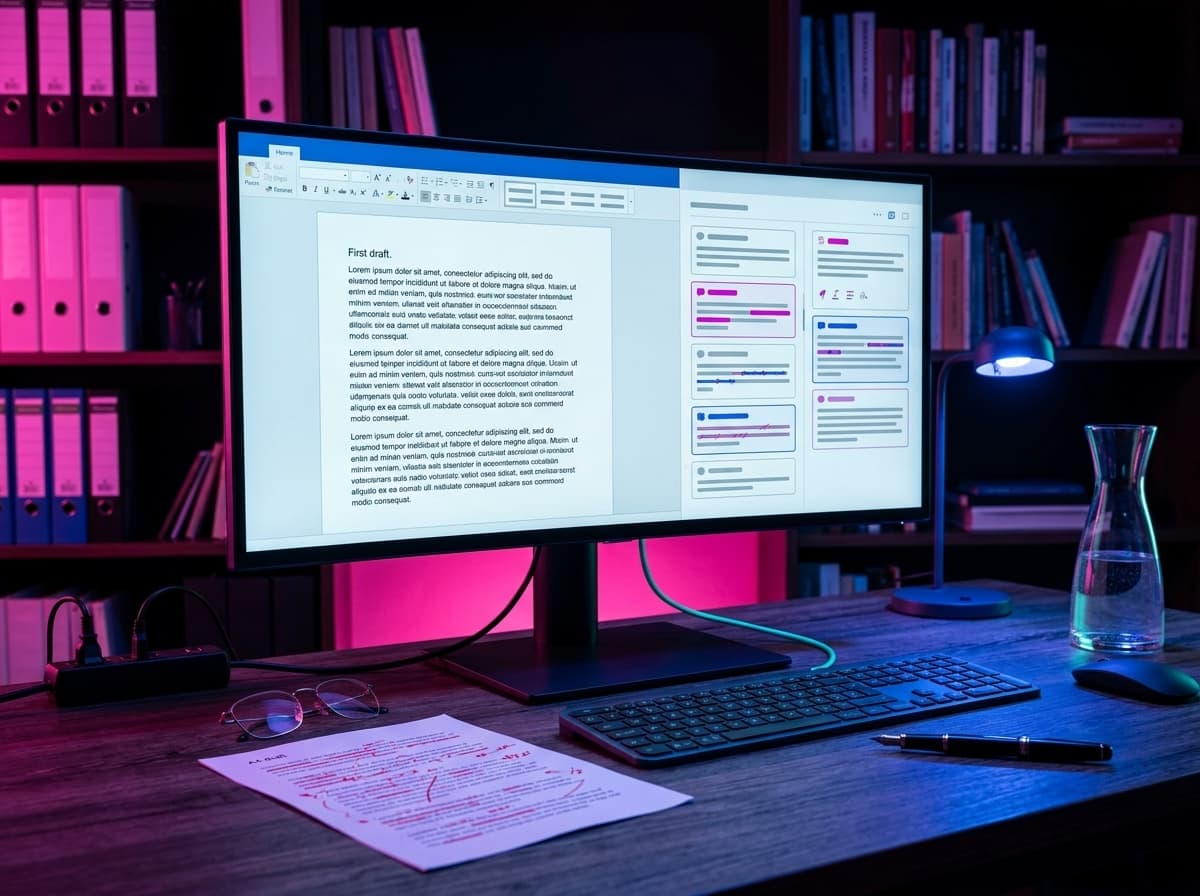
The same research also found the limit: on a task outside what AI does well, consultants using it were 19% less likely to reach a correct answer. That is why a person reviews every document.
| Measured effects of AI assistance in controlled experiments | Source |
|---|---|
| Less time per writing task: 40% | Science, via PubMed |
| Higher writing quality: 18% | Science, via PubMed |
| More consulting tasks completed: 12.2% | Harvard Business School |
| Faster consulting tasks: 25.1% | Harvard Business School |
Noy and Zhang, Science, 2023 (writing tasks); Dell'Acqua et al., Harvard Business School, 2023 (consulting tasks).Source: Science, via PubMed, “Experimental evidence on the productivity effects of generative artificial intelligence (Noy and Zhang, Science 381, 187–192)” (Published 14 Jul 2023; Read on 16 Oct 2026) · Source: Harvard Business School, “Navigating the Jagged Technological Frontier: Field Experimental Evidence of the Effects of AI on Knowledge Worker Productivity and Quality (HBS Working Paper 24-013)” (Published September 2023; Read on 16 Oct 2026)
Third-party figures from published studies. They describe the industry, not results of DevSpeak Labs projects.
Images: AI-generated illustrations.
07 · The report
Independent surveys and official statistics on how businesses are adopting AI and AI agents. Every figure links to its source.
44%
of organizations say AI is scaling across the enterprise38% said the same a year earlier
Published 25 August 2026 · Read on 16 October 2026 · McKinsey & Company, “The state of AI in 2026: On the road to ROI”
Share of respondents to McKinsey's global survey on AI (published August 2026) who report that AI is scaling across their enterprise.
37%
attribute at least some operating profit (EBIT) impact to AI
Published 25 August 2026 · Read on 16 October 2026 · McKinsey & Company, “The state of AI in 2026: On the road to ROI”
Share of respondents who attribute at least some EBIT impact to AI use; McKinsey notes it is about the same as the year before.
20.0%
of EU enterprises with ten or more employees used AI
Published 11 December 2025 · Read on 16 October 2026 · Eurostat (European Commission), “20% of EU enterprises use AI technologies”
EU survey on ICT usage and e-commerce in enterprises, 2025; enterprises with at least 10 employees or self-employed persons.
19.8%
of U.S. businesses use AI in a business function37% of the largest U.S. firms use AI
Published 26 May 2026 · Read on 16 October 2026 · U.S. Census Bureau, “Large Firms With at Least 20 Employees Biggest AI Users”
U.S. Census Bureau Business Trends and Outlook Survey (BTOS), national AI use rate for the collection period ending May 3, 2026 (AI used in the last two weeks in any business function).
33%
of enterprise software applications will include agentic AI (by 2028)
Published 25 June 2025 · Read on 16 October 2026 · Gartner, “Gartner Predicts Over 40% of Agentic AI Projects Will Be Canceled by End of 2027”
Gartner forecast, up from less than 1% in 2024. A prediction, not a measurement.
40%
of agentic AI projects will be canceled over costs, unclear value or weak risk controls (by 2027)
Published 25 June 2025 · Read on 16 October 2026 · Gartner, “Gartner Predicts Over 40% of Agentic AI Projects Will Be Canceled by End of 2027”
Gartner forecast ("over 40%") for the end of 2027. A prediction, not a measurement. It is the reason every DevSpeak Labs solution starts from one clear process and keeps people approving what matters.
| EU enterprises using AI | Source |
|---|---|
| 2021: 7.7% | Eurostat (European Commission) |
| 2023: 8.1% | Eurostat (European Commission) |
| 2024: 13.5% | Eurostat (European Commission) |
| 2025: 20.0% | Eurostat (European Commission) |
Eurostat, enterprises with ten or more employees. Eurostat publishes no 2022 value in this series.Source: Eurostat (European Commission), “20% of EU enterprises use AI technologies” (Published 11 Dec 2025; Read on 16 Oct 2026)
Third-party figures from published studies. They describe the industry, not results of DevSpeak Labs projects.
Our own figures, from the dated snapshot on our investors page. Nothing rounded up.
9
products in production
As of 23 October 2026 · DevSpeak Labs investors page, portfolio stages
Products whose published stage on the investors page is live in production: Havernor, DevSpeak, gRit, TalentAssisto and the four DevSpeak Utilities apps (SpecStudio, Prompt Guardian, Dev Text Forge, PromptForge), each on its own domain, and SkipSponsor AI on the Chrome Web Store. Preview hosts and unreleased products are not counted.
9
of 11 product repositories with passing automated tests (CI)
As of 13 October 2026 · GitHub Actions, as published on the DevSpeak Labs investors page
Product repositories on GitHub whose latest CI run on the default branch passed (9 of 11).
73
rules in our written engineering standard
As of 13 October 2026 · DevSpeak Labs engineering standard, as published on the investors page
Count of numbered rules in the company's written engineering standard (approved October 2026).
2009
the year our founder started leading digital product and technology work
As of 14 October 2026 · Founder biography on the DevSpeak Labs investors page
Juan Jaramillo, CEO and founder: in digital product and technology leadership since 2009, starting as co-founder of a digital agency.
08 · Why DevSpeak Labs
Juan Jaramillo scopes and delivers every project himself, with the same agentic engineering team that builds our products.
The software runs in your accounts. The code, the data and the documentation are yours.
Decisions that matter always wait for one of your people.
We work in English and Spanish across time zones; on the free call we agree working hours that suit you.

09 · Questions
No. We handle design, building and hosting, and we explain everything in plain words. If you have a technical team, we work with them.
Every project is different: after the free call you receive a fixed proposal before any work starts.
In your accounts and the cloud you choose. The AI reads only what it needs, and we sign a data-processing agreement where one applies.
It depends on the project. The proposal you receive after the call states the timeline before anything starts.
Yes, worldwide. We work remotely, in English or Spanish. The free call is the best place to check that working hours fit.
Then we tell you. Sometimes a simple app or a better spreadsheet solves the problem, and that is what we will recommend.
Software in every color.
Let's talk
A free 30-minute call, a chat with our online consultant, or an email: choose the one you like. All three are free and without commitment.
A free 30-minute call or an email: choose the one you like. Both are free and without commitment.
Free, no commitment. After the call you receive a custom proposal.